Classic Solitaire: Card Games
- 4.5
- Rating
- 1.00M
- Installs
- Free
- Price
 Analysis by App-foxy
I installed Classic Solitaire: Card Games expecting a familiar way to fill a few quiet minutes, and that is exactly where it makes the strongest impression. This is a free card game from CYBERNAUTICA, focused on the traditional Solitaire experience rather than trying to turn a simple card layout into something noisy or complicated. I can open it, make a few moves, finish a deal or abandon it, and begin again without needing to learn a new system.
That simplicity is not a small detail. Solitaire works because the first move is immediate, the board answers every decision, and a completed game gives me a natural stopping point. When I want another round, the next deal is ready to create a fresh little puzzle. The game has been available since September 16, 2017, and its continued presence makes sense: it serves the familiar card-game habit well, especially for people who want something calmer than a competitive mobile game.
How the first move turns into a complete Solitaire session
When I settle into a round, I find that the first move is less a commitment than an invitation to read the board: one card can reveal a new option, while another can quietly narrow the route ahead. I’ll look at how that small opening decision develops into a full session, and why a deliberate sequence often matters more than moving quickly.
You May Also Like

 Blood Strike: 2.5 Anniversary
Blood Strike’s Loadouts Turn Every Drop Into a Tactical Gamble
A close look at Blood Strike’s custom loadouts: how fast access to signature weapons reshapes its battle royale rhythm, rewards preparation, and narrows the gap between fights.

 Pandora - Music & Podcasts
Pandora’s Music Is Easy to Start, but Harder to Recover
Pandora’s strength is its low-effort path from a seed to a station. Its weak spot is how much confidence it asks you to place in connection, setup, and quiet recovery.

 8 Ball Pool
 Is Built on Rivalries, Rematches, and Routine
A close look at the rivalries, rematches, shared routines, and unanswered safety questions that turn a quick pool match into a persistent mobile community.

 Samsung Music
’s Quiet Strength Is Playing What You Already Own
Its reach comes less from spectacle than from dependable access to a personal library. That simplicity is both the app’s strongest retention engine and its ceiling.

 AccuWeather: Weather Radar
AccuWeather Review: A Quick, Clear Forecast for Everyday Decisions
For everyday plans, the best forecast is the one you can understand quickly. AccuWeather makes rain timing, radar, and local conditions easy to act on, with a few trade-offs.

 Hill Climb Racing
Why Hill Climb Racing Still Turns Crashes Into One More Run
A tiny car, a bumpy hill and one more upgrade: Hill Climb Racing keeps resurfacing because its simple chaos makes every near-miss feel personal.
More From Our News Desk



The opening action is quick and easy to understand
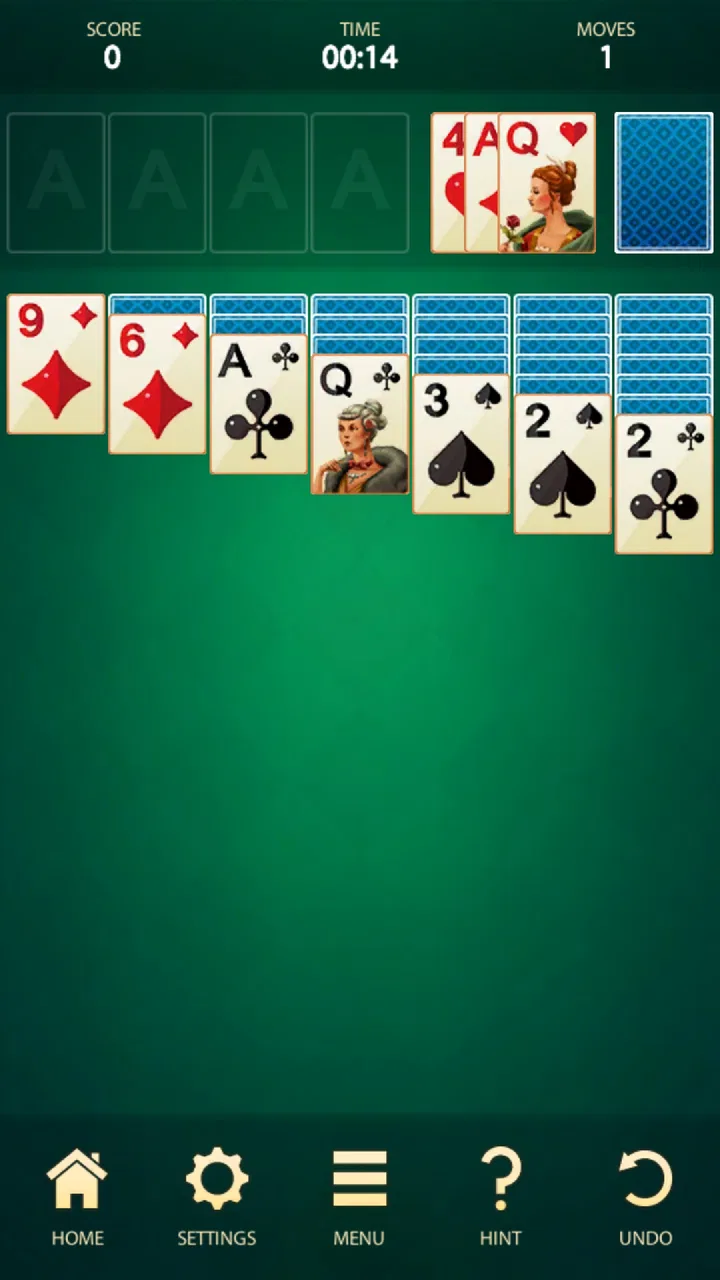
The first thing I like about this game is that it does not make me work before playing. The central activity is moving cards according to Solitaire rules, looking for a legal placement, and gradually exposing hidden cards. A new player can understand the basic aim quickly because the board itself explains the relationship between available cards, empty spaces, and the foundations. Someone who already knows Solitaire can start making decisions almost immediately.
That makes it particularly suitable for short breaks. I can imagine using it while waiting for an appointment, taking a pause between household tasks, or winding down before sleep. It does not demand the attention pattern of a multiplayer card game, where another person is waiting for my turn. I can stop after one move or continue through a full deal, depending on how much time and concentration I have.
The most important early decision is not simply finding any legal move. I need to consider which move reveals a hidden card, which move preserves flexibility, and whether moving a card to a foundation too soon could remove a useful option from the tableau. That gives the game more depth than its quiet presentation might suggest. Even a familiar deal can make me pause when two moves appear legal but only one keeps the board open.
For a beginner, I recommend treating every exposed card as information rather than immediately chasing a visible foundation move. The hidden cards are usually the real source of progress. If I focus only on building foundation piles, I can accidentally block the tableau and leave myself with fewer ways to reorganize the remaining cards. This is one of the practical lessons the game teaches through play rather than through a long explanation.
The feedback rhythm keeps each move meaningful
Solitaire has a clear action-and-response rhythm. I tap or move a card, the layout changes, and the new arrangement tells me what to consider next. When a hidden card becomes available, the reward is not merely visual; it creates another decision. I may gain access to a useful rank, open a column, or discover that the deal is more awkward than it first appeared.
I find this feedback especially satisfying because it is quiet but constant. The game does not need a complicated progression system to make a move feel worthwhile. A small improvement in the tableau can be enough. Moving a sequence into an empty space, uncovering a card, or placing the right card on a foundation gives me a reason to examine the board again instead of playing mechanically.
The feedback also exposes mistakes honestly. If I make a move that looks attractive but reduces my future options, the next few turns often reveal the problem. That can be frustrating when I am close to finishing, but it is also what gives the puzzle its character. The game asks me to think about consequences rather than simply matching cards whenever possible.
One useful habit is to scan the tableau before touching the stock. I look first for moves that expose hidden cards, then for ways to rearrange longer sequences, and only afterward turn to the available draw. This order helps me avoid spending useful stock options too early. It is a small workflow change, but it makes the game feel more deliberate and reduces the sense that I am just cycling through cards hoping for luck.
Where the reward comes from
The reward in this card game is the gradual conversion of a crowded, uncertain layout into something organized. At the start, I have several columns competing for attention. As cards move into place, the board becomes easier to read. Foundation piles grow, hidden cards disappear, and the remaining choices become more focused. The satisfaction comes from seeing a plan work across several turns.
Winning a deal is the obvious reward, but it is not the only one. I also get a smaller sense of progress when I rescue a blocked column or find a way to use an empty space effectively. This matters because not every session ends with a clean victory. A thoughtful attempt can still feel worthwhile if it helps me understand why the position became difficult.
That makes the game a good fit for players who enjoy low-pressure problem solving. I do not need to compete with anyone, build a collection, or maintain a complicated account of progress to enjoy the core loop. The pleasure is in reading the board and making a sequence of choices that gradually improves my position.
At the same time, players who need constant novelty may find the reward structure too restrained. There is no reason to expect the same stimulation as a fast action game or a card battler with opponents and changing decks. This is Solitaire’s traditional appeal: the rules remain stable, while the challenge comes from the arrangement of the cards and the quality of my decisions.
Why the next session begins so naturally
A Solitaire session has a built-in reset. Once I win, the board has reached its goal and another deal becomes tempting. If I lose or reach a position with no useful route forward, starting over removes the frustration without requiring a long recovery period. The restart is part of the appeal because the game does not make me carry a failed attempt into the next one.
I often find that the desire for another round comes from one unfinished question: could I have played that position differently? The reset gives me a chance to test that feeling. I may change the order in which I expose cards, delay a foundation move, or use an empty column more carefully. The second attempt is not identical in my mind, even when the rules are familiar, because I bring a clearer plan to it.
This is also why the game works well in uneven pockets of free time. If I have only a few minutes, I can begin a deal without committing to a long campaign. If I have more time, I can play several rounds and compare how different decisions affect the outcome. The loop is self-contained, so stopping does not feel like abandoning a larger story.
One practical tip is to stop treating every difficult position as a personal failure. Sometimes the useful response is to restart early rather than spend several minutes repeating the same unproductive sequence. Other times, I can use the stuck position as a lesson and search for the move I overlooked. Choosing between those two responses keeps the game relaxing instead of turning a casual break into an unnecessary test of patience.
What the game does well for different players
For someone returning to Solitaire after years away, this is an approachable choice because the central rules are recognizable and the game stays focused on card play. It is also suitable for a family member who wants a straightforward game for an Everyone-rated audience. The absence of a competitive opponent makes it less intimidating than many modern card games, and a player can learn at their own pace.
I think it is strongest for three kinds of use. First, it works as a short mental reset when I want to concentrate on one small problem instead of scrolling through unrelated content. Second, it suits people who enjoy familiar routines and prefer a stable ruleset over constant updates. Third, it gives experienced Solitaire players a convenient way to revisit the classic format without learning a new genre.
The game has an average rating of 4.5 from around 5.2 thousand ratings, and it has passed one million installs. Those figures fit my overall impression of a well-established casual card title with a broad audience. They do not change the fact that the experience is deliberately modest, but they do suggest that the basic format has connected with many players.
Its current version is 4.9, and it runs on Android 7.1 or later. That makes checking device compatibility important before downloading, particularly if I am using an older phone or tablet. The game is free, which lowers the barrier to trying it, although I still approach any free mobile title with the practical expectation that the surrounding experience may not feel as clean as a paid, minimalist card app.
Small decisions that improve the experience
My first useful adjustment is to play with a goal for the round. Instead of moving cards as quickly as possible, I try to expose hidden cards, preserve future moves, and avoid closing off a column without a reason. This turns a passive time filler into a compact exercise in planning. It also makes losses more informative because I can identify which priority I ignored.
My second adjustment is to use the reset deliberately. If the opening layout leaves several promising routes, I continue and explore. If I make an early move that clearly blocks the tableau, I restart rather than stubbornly forcing the position. This is not about chasing a perfect result; it is about keeping the action-feedback cycle brisk and enjoyable.
My third tip is to separate visible progress from actual flexibility. A foundation pile may look impressive, but moving cards there is not automatically the best choice. Sometimes a card is more useful in the tableau because it helps uncover another card or supports a sequence. I get better results when I ask, “What does this move allow next?” instead of only asking whether the move is legal now.
A fourth insight concerns attention. Solitaire is relaxing when I give it enough focus to see the board, but it becomes tedious if I play while constantly switching to other tasks. The game does not provide the social pressure that keeps me engaged, so I need to decide whether I want a mindful puzzle or background entertainment. For the former, it works well; for the latter, a more animated game may be a better fit.
Where it falls short compared with alternatives
The main limitation is also the reason many people will like it: the experience stays close to classic Solitaire. If I want multiplayer matches, elaborate challenges, collectible cards, narrative progression, or a strong sense of personalization, this is not the right category of game. A competitive card title will offer more tension, while a premium Solitaire app may feel more polished for someone who wants a distraction-free presentation.
It can also feel repetitive if I expect every session to introduce a new mechanic. The basic loop remains action, board feedback, gradual improvement, and reset. That loop is effective because it is predictable, but predictability can become monotony for players who need frequent surprises. I would choose this game for dependable casual play, not for a constantly changing entertainment experience.
Another trade-off is the free format. Free access is convenient, especially when I only want a familiar card game without making a purchase, but players who are sensitive to interruptions or visual clutter may prefer a paid alternative designed around a cleaner, quieter interface. I would make that choice based on how often I play and how much presentation matters to me, rather than assuming that every Solitaire app offers the same level of comfort.
The game also asks me to bring my own challenge. Without a rival or a larger progression goal, I decide whether the satisfaction of solving a deal is enough. For me, it usually is during a short break. For someone who needs explicit goals, leaderboards, or competition to stay interested, the traditional format may feel too bare.
My verdict on the complete loop
After spending time with it, I see Classic Solitaire: Card Games as a dependable, focused card game rather than a feature-heavy mobile production. The first move is accessible, every card placement gives useful feedback, and the reward comes from gradually taking control of the layout. When a deal ends, the reset is immediate enough to make another attempt feel natural instead of burdensome.
I would recommend it to anyone who wants a free Solitaire experience for short breaks, quiet evenings, or simple mental practice. It is especially appealing if familiar rules matter more than novelty. I would skip it in favor of a competitive or more elaborate card game if I needed opponents, progression systems, or a deeper sense of changing content.
The developer, CYBERNAUTICA, has kept the central idea clear: place cards thoughtfully, watch the board respond, enjoy the small victories, and decide whether the next deal deserves another try. That clarity is its biggest strength. The best reason to play is the clean reset after every attempt: one solved board ends the session, and one unsolved board invites a smarter next move.
For me, that is enough to make it worth keeping around. It does not try to be anything other than a classic card pastime, and the result is easy to understand. As long as I approach it for calm, repeatable Solitaire rather than constant excitement, it delivers a satisfying loop with just enough decision-making to keep a familiar game interesting.
FAQs for Classic Solitaire: Card Games
01What is Classic Solitaire: Card Games?
Classic Solitaire: Card Games is a digital version of the traditional Klondike Solitaire experience, designed for players who enjoy relaxing, single-player card games. It generally includes familiar rules, drag-and-drop or tap controls, and layouts that are easy to understand. The app is suitable for short sessions, whether you want to play casually for a few minutes or spend longer trying to complete challenging deals.
02How do you play Classic Solitaire: Card Games?
The main objective is to arrange all cards into the four foundation piles, separated by suit and placed in ascending order from Ace through King. On the tableau, cards are usually arranged in descending order with alternating colors. You can move available cards between columns, reveal hidden cards, and draw from the stock pile when no useful move is immediately available. The game follows the familiar Solitaire rules most players already know.
03Does Classic Solitaire: Card Games work offline?
Classic Solitaire: Card Games is generally well suited to offline play, which makes it convenient for travel, waiting rooms, or situations without a reliable internet connection. Basic gameplay normally does not require a continuous connection. However, certain features such as advertisements, online statistics, cloud synchronization, daily challenges, or leaderboard updates may depend on internet access and can vary according to the version installed on your Android or iOS device.
04Is Classic Solitaire: Card Games free to download?
The app is typically available as a free download, allowing users to start playing without purchasing the game upfront. Like many free mobile card games, it may support its development through advertising, optional purchases, premium features, or upgrades that remove ads. Before downloading, check the store listing for the current pricing details, in-app purchase information, supported devices, and whether the free version includes all game modes.
05Is Classic Solitaire: Card Games suitable for beginners?
Yes, the game is usually accessible to beginners because the rules are familiar, the objective is straightforward, and the interface focuses on cards rather than complicated menus. New players can learn by experimenting with legal moves and using available hints, undo options, or tutorials if included in their version. Experienced Solitaire players may also appreciate customizable themes, scoring, statistics, and different difficulty settings when available.
Pros
- Works well offline for playing without an internet connection.
- Simple controls make it comfortable for casual players of all ages.
- Multiple solitaire variations provide more variety than standard Klondike.
- Short rounds are ideal for quick breaks or commutes.
- Adjustable card designs and backgrounds improve visual comfort.
Cons
- Ads may interrupt play
- especially between completed rounds.
- Some features or themes may require in-app purchases.
- Random deals can occasionally feel repetitive over longer sessions.
- Small cards may be difficult to read on compact phone screens.
- Limited social features offer little interaction with other players.

Classic Solitaire: Card Games
Gallery